
Pacifichem conference report
19 Feb, 2026
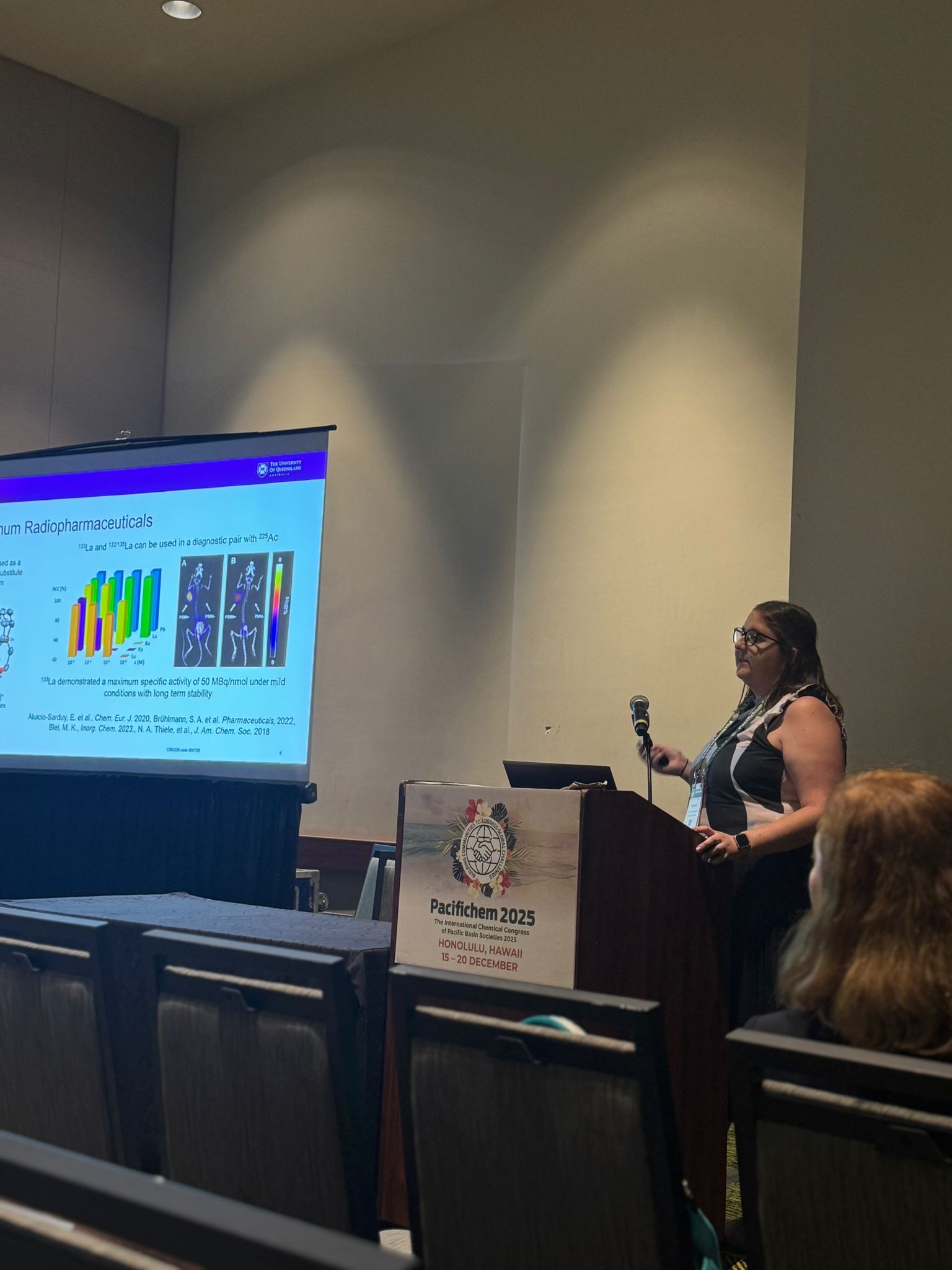
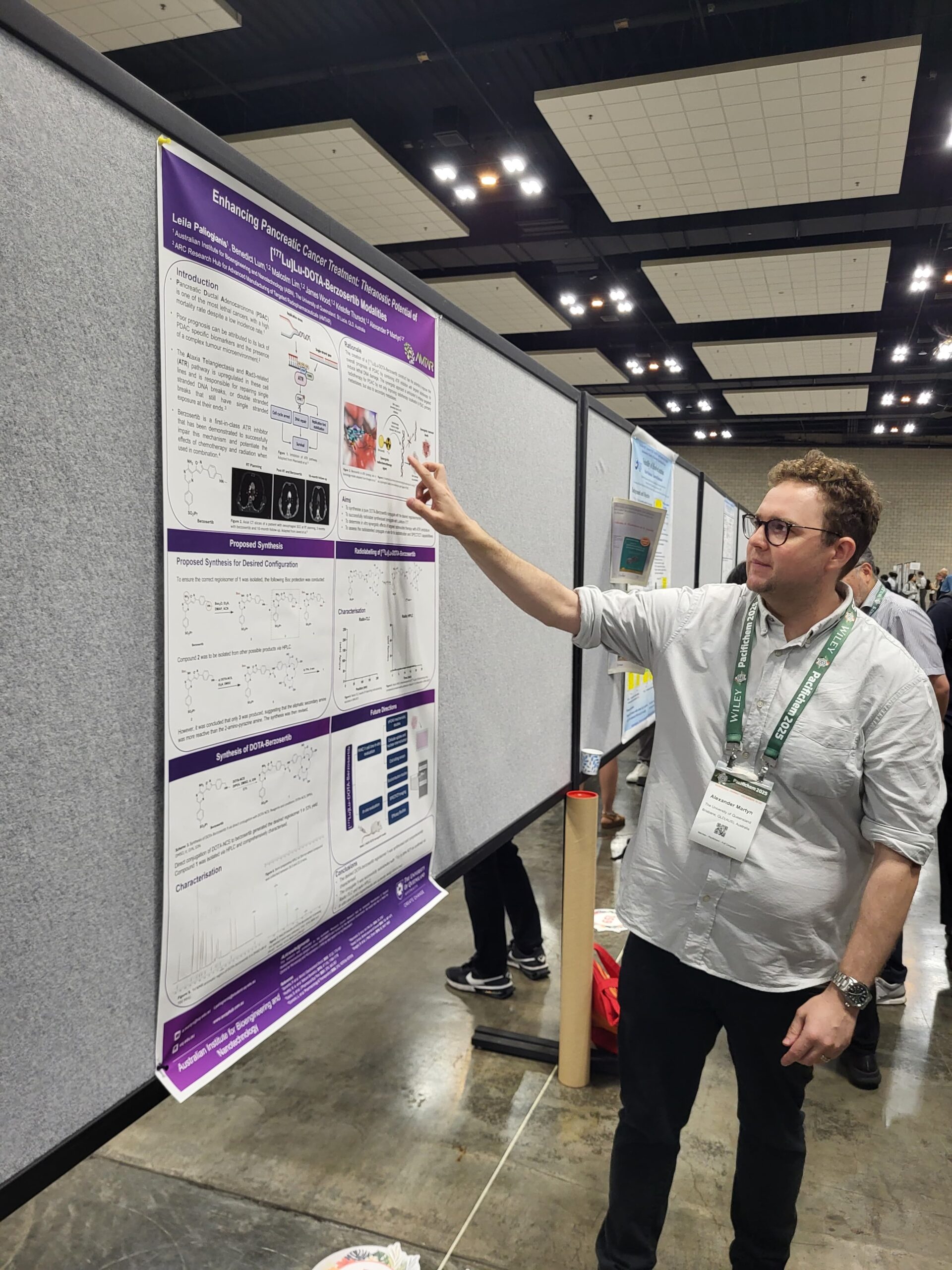
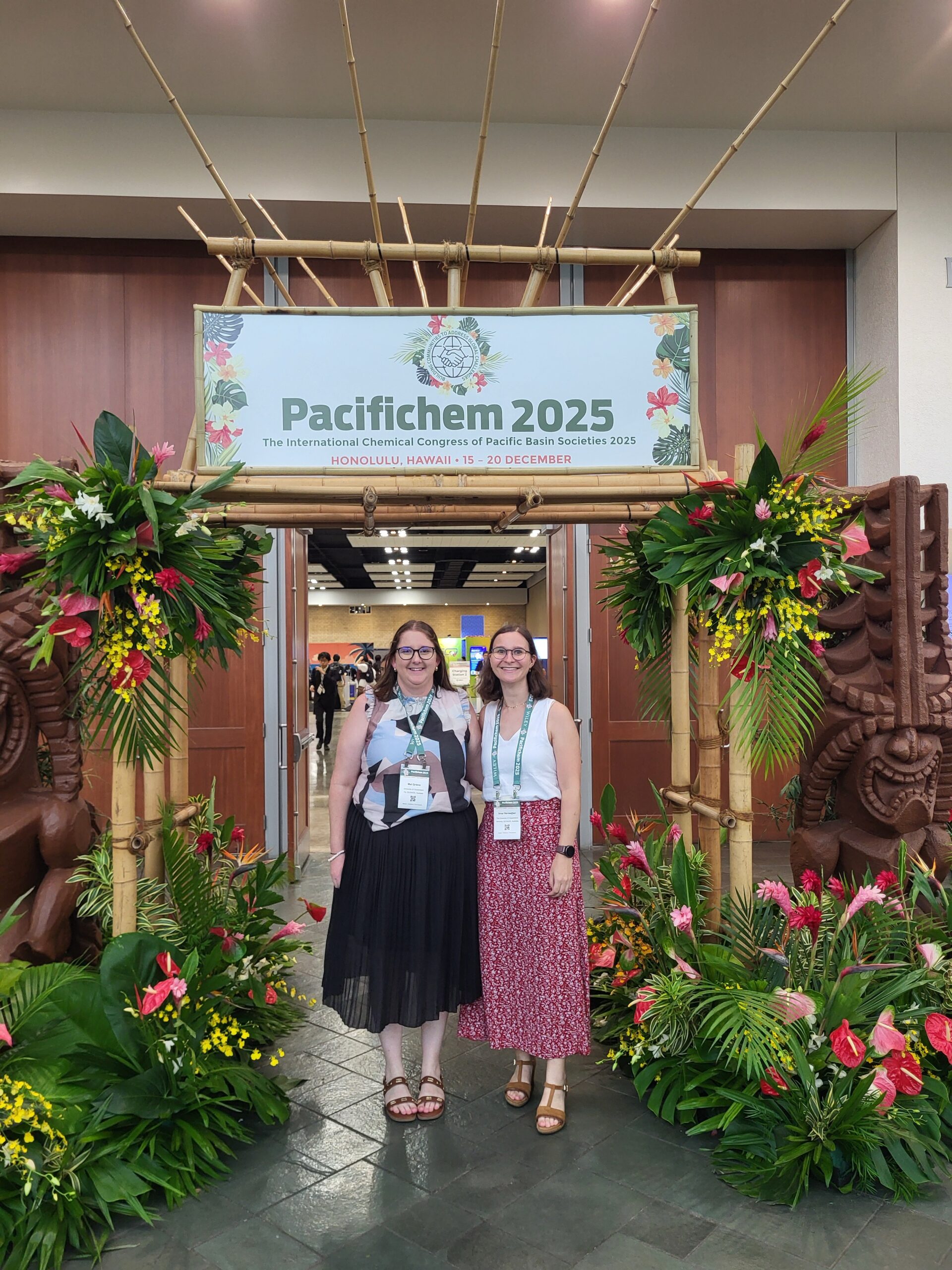
In December 2025, AMTAR travel award recipients Dr Melyssa Grieve and Dr Alexander Martyn together with PhD student Irma Vermeijlen from The University of Queensland attended the Pacifichem 2025 conference in Honolulu, Hawaii, USA. Pacifichem is one of the largest and most prestigious international chemistry conferences that hosts over 10,000 attendees from over 20 countries every 5 years. They represented AMTAR in the ‘Advancements in Chemistry of Theranostics for Targeted Radionuclide Therapy’ symposium where several universities and companies shared their latest research.
With the wet weather keeping them inside, they were able to network and connect with several academics and industry representatives across Europe, USA, Canada and Japan. The sessions were divided into production, chelator development and targeting ligands. Some highlights from the 2-day symposium are shared below.
Oak Ridge National Laboratory (USA) showcased the suite of radioisotopes being produced at their facility (e.g. Ac‑225, Ra-223, Pb-212, W-188 and Sn-117m) and their rigorous analytical techniques. Oak Ridge is also collaborating with the University of Washington to improve the production of At-211 by improving bismuth target design. They also showcased their research into biocompatible radio-nanoparticles.
TRIUMF (Canada) and Terrapower (USA) are exploring improvements to the production of Ac‑225 to keep up with global demands. TRIUMF presented their efforts towards the production of Ac‑225 from the irradiation of Ra-226 targets, and Terrapower are optimising the recycling of valuable radium using MnO2 resins.
Several academic talks around theranostic research were a highlight. The University of Utah showcased their production abilities of Tb-161. They also shared how they are using targeted alpha therapy (Bi-213 and At-211) to target and reduce amyloid plaques in AZ mouse models. Research from University of Wisconsin presented their research into radionuclides (Sb-119, Hg‑197, Co-55, Er-165 and Pt-191) that could be translated into target auger therapies. The University of Missouri presented research into trithiol chelators to harness the theranostic potential of arsenic radionuclides.
Dr. Grieve presented her work around the development of chelators for alpha-emitting radionuclides in this session alongside colleagues from the Universita degli Studi di Padova (Italy) and TRIUMF (Canada). New chelators based on the 1,14-diaza 18-crown-6 scaffold are being developed with a variety of pendant arms for Ac-225, Ra-223 and Ba-131. At present, H2macropa remains the best chelator for Ra-223 and Ba-131 radiopharmaceuticals, but investigation with new chelators is informing the requirements for development of new chelators. There was a generalised concern about the stability of bifunctional Ra-223 radiopharmaceuticals. The H4crown chelator developed at TRIUMF is showing significant promise with Ac-225 TAT.
There were several talks about targeted radiohalogens in theranostics, particularly At-211. A concerted effort has been made to build collaborative infrastructure in Japan to support At-211 development and clinical implementation. The work presented included work by the University of Osaka involving At-211 included the development of anti-HER2 antibodies with galactose-containing sugars to prevent cellular internalisation and improving immune activation and work by The Institute of Science Tokyo and RIKEN on in-vivo synthesis of TAT agents.
The University of Wisconsin also presented some research on nuclear imaging combined with a tuneable prodrug strategy that allows for release of therapeutic agents upon complexation of certain trivalent Lewis acid metal ions. Finally, Brookhaven National Laboratory (USA) presented their work on developing a Ac-225 therapeutic agent TOBi-89 for Pancreatic ductal adenocarcinoma. Although their compound showed good antigen binding, in vivo models showed minimal uptake by antibody.
The most valuable component of the symposium was the networking that it made possible. This culminated in a networking event sponsored by MedChem Imaging, the ACS Division of Fluorine Chemistry and TerraPower. This was a wonderful opportunity leading to relationships that have been fostered into new collaborations.